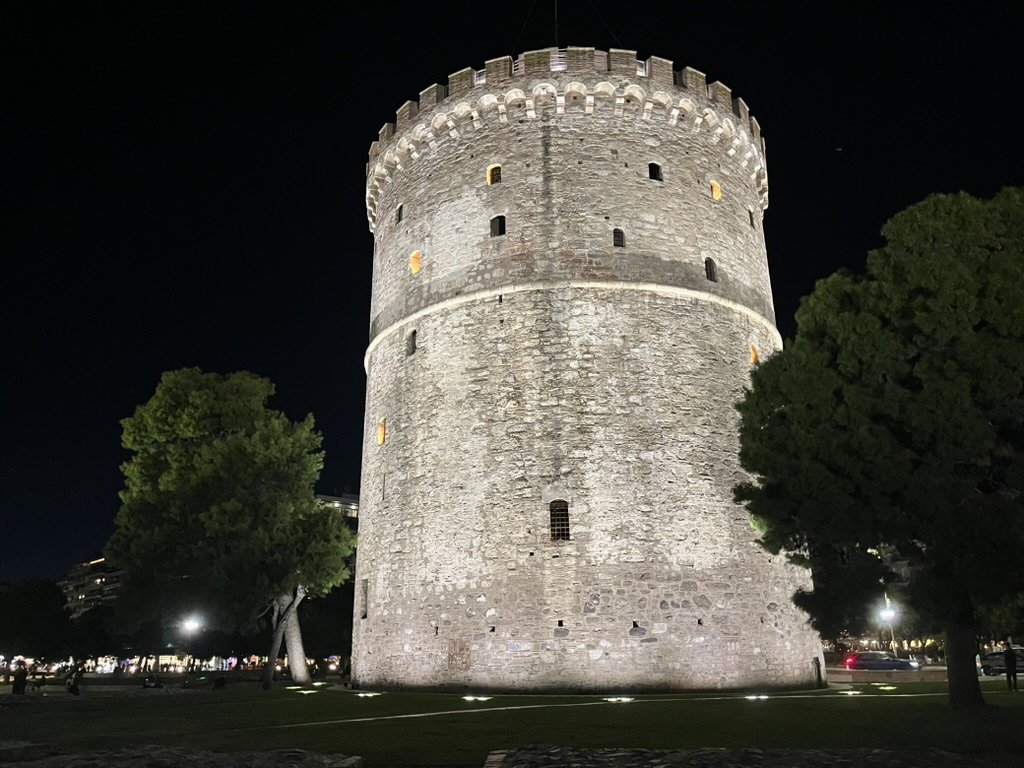
Voxxed Days Thessaloniki 2026: agents, MCP and a long way home
On 20 and 21 November I was at Voxxed Days Thessaloniki, together with Dieter D'Haeyere, co-founder of ask-gustavo.com. It was the conference's tenth edition: two days, three rooms and a programme in which AI agents turned up almost everywhere.
Below are the sessions I attended and what I took away for our own work. Every session was recorded: you can find the recordings in this YouTube playlist.
A design system for agents
Jen Anastasopoulou and Alexandros Stavrou from Allwyn explained how they prepared their design system for AI agents, so the agents write frontend code that fits the rest of the product. Two tips I'm applying right away:
- Put DO and DON'T screenshots in your design system. An agent learns as much from a wrong example as from a right one.
- Ask the agent what went wrong at the end of a plan. You add those lessons to your instructions, so the next run doesn't make the same mistake again.
AI won't save your productivity
Sven Peters from Atlassian made the case for human–AI collaboration: agentic workflows only pay off when they solve a real problem for your team and you measure the result.
The idea I took home: a risk review analyser. After the regular review agent has looked at a pull request, a second agent assesses the risk of the change and decides whether a human still needs to review it. Small, low-risk changes get through faster, and reviewers spend their time where it counts.
Existing REST APIs as MCP tools
Yannis Koskinaris and Vaggelis Spathas from Cadence (BETA CAE) showed how they open up their SPDRM platform to AI assistants. They annotate existing REST methods, and an MCP server publishes them as tools. An AI assistant talks to that server, and the LLM picks the tool it needs.
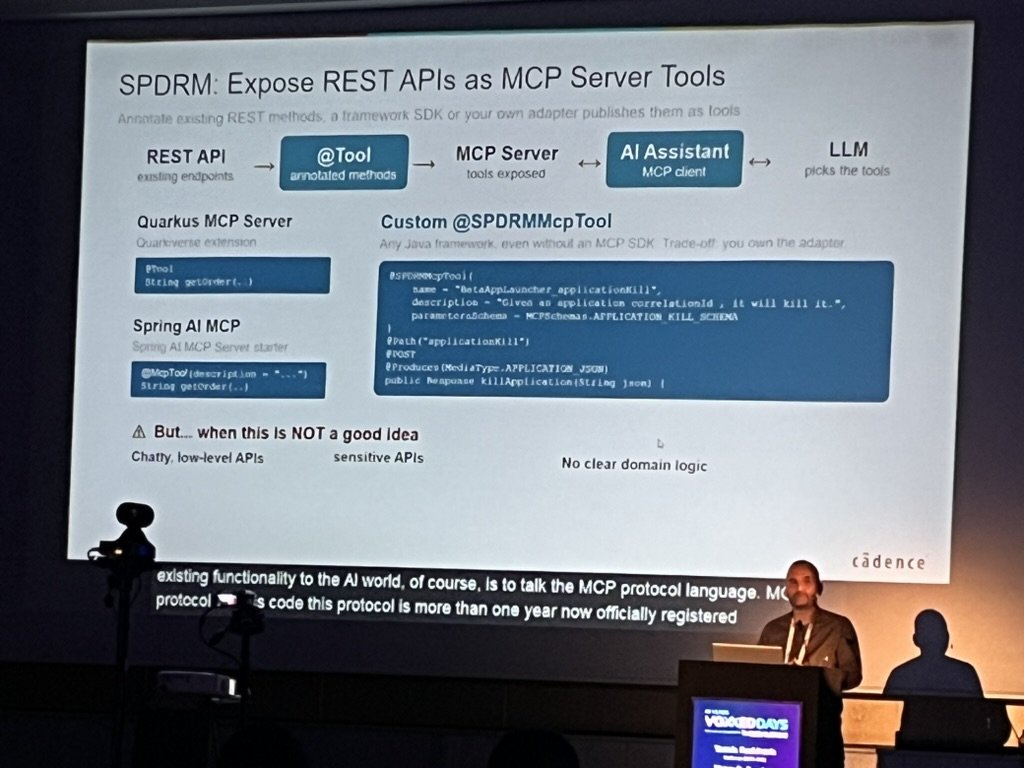
There are three ways to do it: the Quarkus MCP Server extension with @Tool, Spring AI MCP with @McpTool, or a custom annotation such as their @SPDRMMcpTool for frameworks without an MCP SDK. That last one works anywhere, but you maintain the adapter yourself.
The most important part was at the bottom of the slide: don't do it for chatty, low-level APIs, for sensitive APIs or for APIs without clear domain logic. A tool should be a meaningful action, not a thin layer over a CRUD endpoint.
Workshop: MCP and A2A with ADK
On Saturday morning I took the hands-on workshop by Mete Atamel (Google). With the Agent Development Kit you build an MCP server with tools, deploy it to Cloud Run and make your agent reachable for other agents through the A2A protocol.
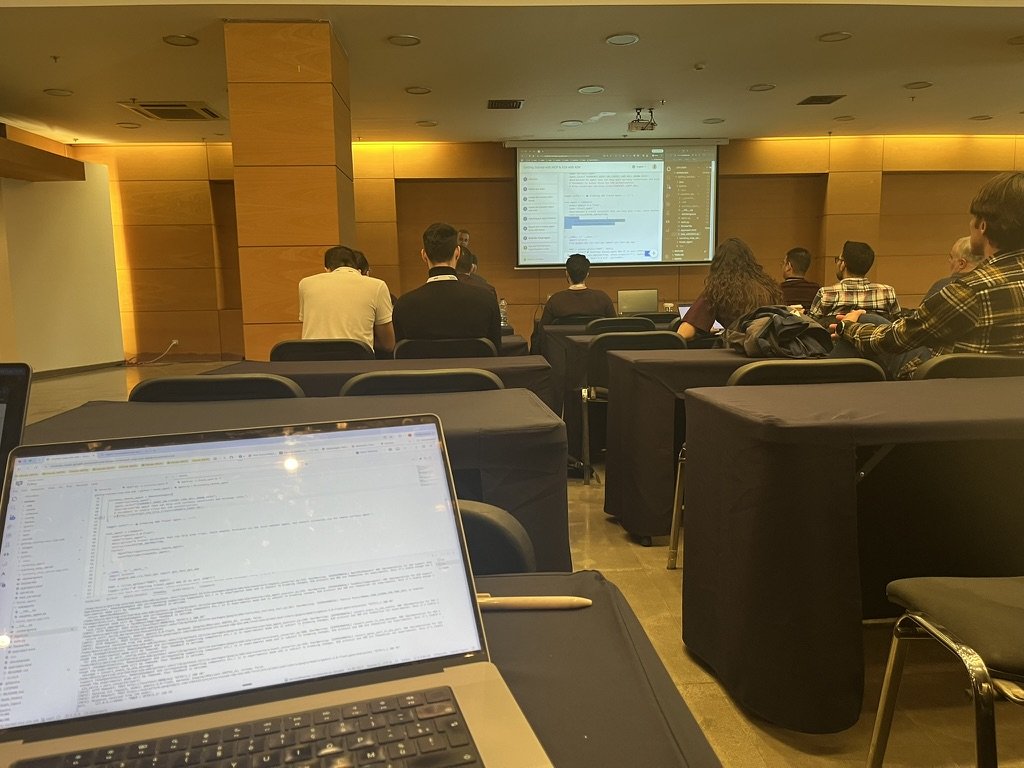
The material is on GitHub, so you can work through it yourself. I completed it and earned a badge on my Google Developer profile.
Measuring RAG with RAGAS
Marios Christos Malamatinos from Aristotle University presented TouaRAG, an open source multi-layer RAG framework that adapts travel advice to the traveller's context and preferences. My main lesson was how they evaluate it: with RAGAS. It measures whether an answer stays faithful to the retrieved context and whether that context was relevant, instead of judging by feel whether a RAG solution works.
A game that teaches coding
Archontis E. Kostis (archontis.gr) showed RIVETS, a game that teaches beginners to code, with its own language, parser and interpreter. He also mentioned Greenfoot: a Java environment for building 2D games, and an easy alternative to Unity.
What a failing bearing teaches about CI
Anastasios Papadopoulos treated regressions in CI pipelines like predictive maintenance of machines: you look for the signals before things break. He used PdMLabs, an open source predictive maintenance platform, on CI data from open source projects, including Apache and Mozilla.
Q-day is coming
Jules May closed Saturday for me with post-quantum cryptography. A large enough quantum computer breaks the asymmetric algorithms we use today, and whatever encrypted traffic is captured now can be decrypted later. What I took away:
- Review your algorithms. RSA 4096 buys some time and AES 256 remains safe for symmetric encryption, but for key exchange the real fix is moving to the hybrid
X25519MLKEM768. - Certificates keep getting shorter lives. From 45 days, it's heading towards a few hours. If you still renew certificates by hand, now is the time to automate it.
A long way home
We were due to fly back on Monday, but a strike at the Belgian airport put a stop to that. It became a detour: first to Belgrade in Serbia, then on to Paris, and from there the TGV to Brussels. Three countries, two flights and a train ride later, we were back in Belgium after all.